Henan, China — 19422D Survival RPG09/2022–04/2024
Hunger 1942
Hunger 1942 is a 2D survival RPG set during the 1942 Henan Famine, blending real histories with gameplay to explore human struggle in disaster.
At a glance
- Initiated and led design, history research, and code
- Levels built from collected real oral histories
- Playable demo finalized in August 2023
2endings to the first act, set by moral choices
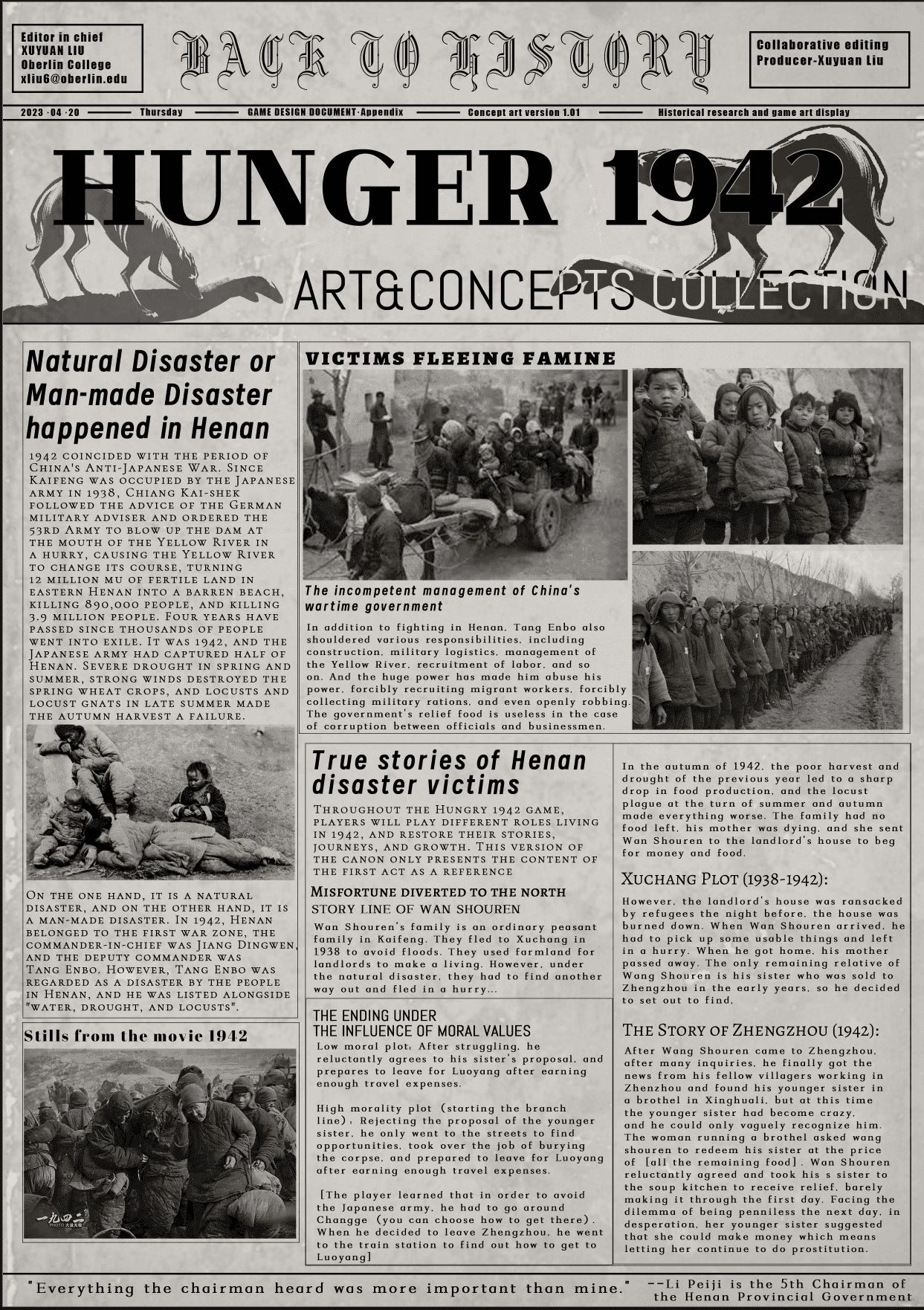
Back to History — the game-design document appendix printed as a 1942-style broadsheet; its columns carry the oral histories the levels are built from.
Hover the broadsheet — the loupe magnifies
Read the full sheet01 · Dispatch
Survive how you choose — a moral-value system weighs every decision and branches the ending.
Hunger 1942 is a game project that I initiated and developed with my team. It is a 2D pixel-style historical role-playing survival game inspired by The Oregon Trail, set against the backdrop of the 1942 Henan Famine. The project encompasses the game itself, artistic direction, and historical research.
Launched in September 2022, the historical research and foundational game framework were completed by January 2023. The game was inspired by reflections on food shortages during COVID-19 and insights from my modern Chinese history class, prompting me to explore the struggles of ordinary people during times of catastrophe.
In designing the game, I combined survival mechanics with a narrative drawn from real oral histories to immerse players in the harsh realities of famine. Additionally, this project serves as a platform to examine how games can function as both educational tools and interactive art. I aim to explore how game mechanics and player interactions shape decision-making and emotional engagement.
My role encompassed game design, historical research, and programming. Looking ahead, I hope to further develop this project within a studio setting.

02 · In Motion
The first act, playable
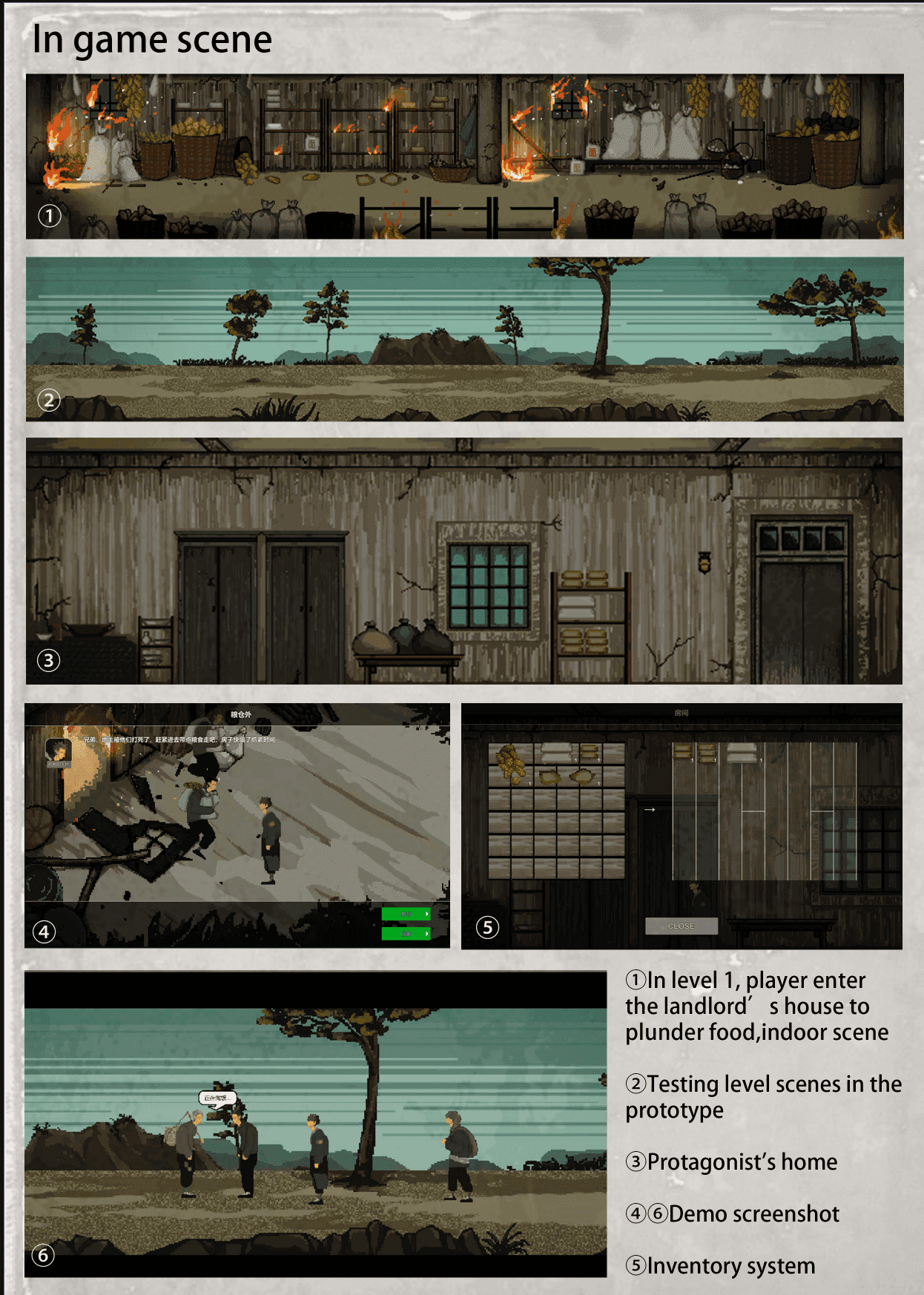
Level 1 — entering the landlord’s house to plunder food; prototype capture.
Watch the full preview03 · Editorial
Ordinary suffering deserves more than one sentence of history.
During the COVID-19 epidemic in 2022, intense pressures from lockdowns, financial difficulties, illness, and food shortages gradually shifted people's attitudes from empathy toward self-interest. Such shifts are understandable under extreme circumstances. When studying modern Chinese history, I saw parallels in the hardships and changing human nature during the 1942 famine, making me reflect on how history repeats itself. Whether resisting Japan a century ago or battling today's epidemic, we often highlight concepts of “righteousness.” Yet beneath such ideals, the suffering of ordinary people is frequently summarized by a simple phrase like "the people lived in misery," with their individual stories overlooked.
Chinese culture deeply romanticizes self-sacrifice—using one's most precious life for collective ideals—as the highest form of achievement. From feudal loyalty and early Republican patriotism to today’s vision of national rejuvenation, we consistently celebrate sacrifice for grand objectives. Yet narratives unrelated to these ideals are often marginalized or forgotten. History textbooks selectively pass down the stories deemed worthy, reinforcing a focus on collective righteousness. This raises the question: shouldn’t ordinary people’s everyday struggles also be understood, giving us a fuller, more authentic historical picture? Perhaps understanding their hardships can deepen our reflection on the very ideals we hold dear.
Though there is no definitive "correct" way to narrate history, by examining ordinary lives in past disasters—as we now experience personally during this epidemic—we can develop deeper empathy and thoughtfully reconsider concepts such as "righteousness," "justice," and "humanity." Our project focuses specifically on the 1942 Henan famine, collecting overlooked individual narratives and using the immersive quality of games to reconstruct a realistic historical environment. Through authentic stories and personal choices, we encourage players to reflect critically and independently, striving always to maintain historical objectivity and avoid ideological bias.
04 · The Archive
From character sheets to playable scenes.
Plate 01
Wan Shouren — the protagonist
Character board from the game-design document — digital concept art and pixel sprites drawn against archival photographs and film-still references; the printed notes set out the moral-value system.
View full plateHover a plate — the loupe magnifies
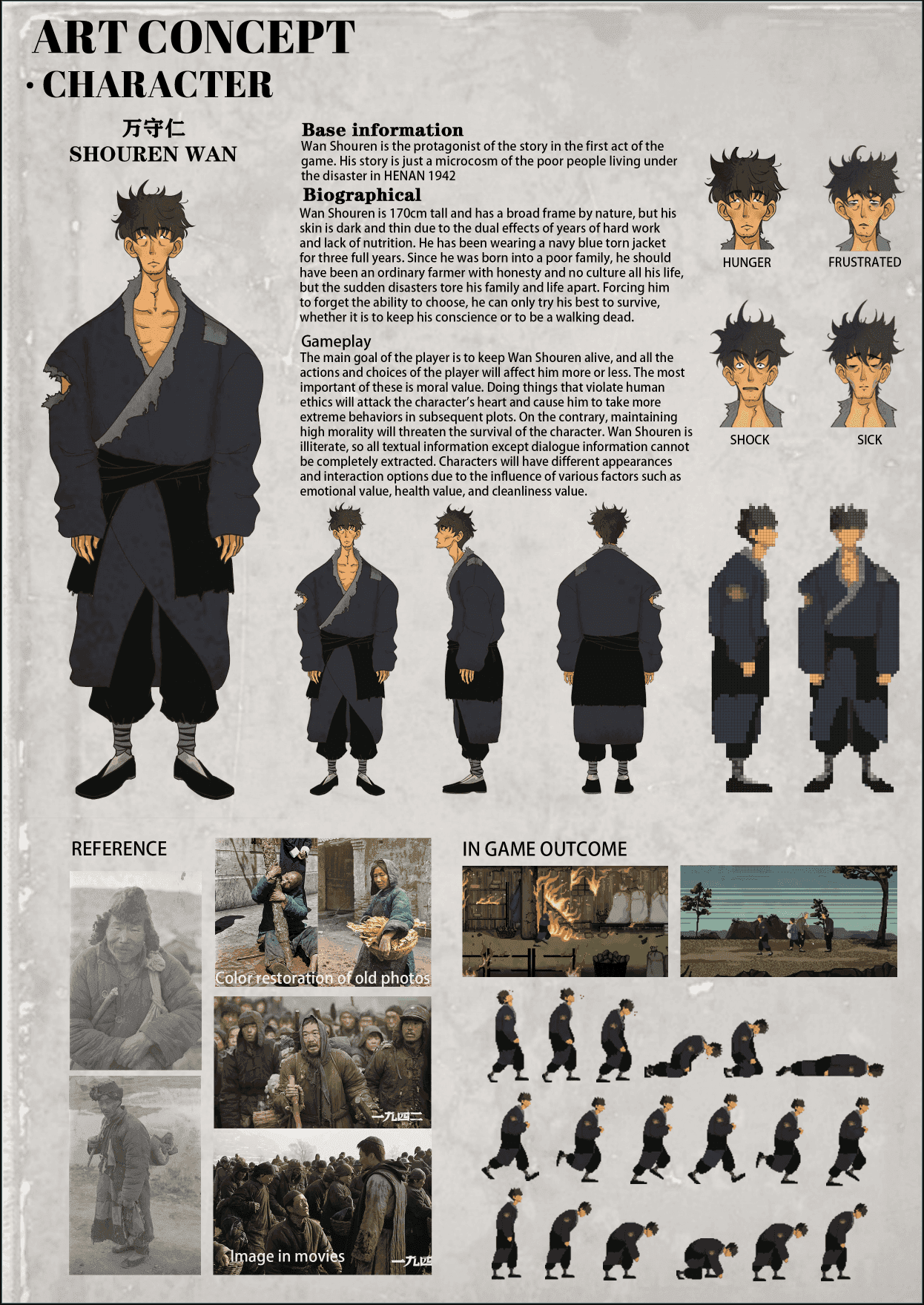
Plate 02
Jiayan Wan — the younger sister
Companion board in the same archival format — her biography and the first act's trade-off are typeset on the sheet itself.
View full plate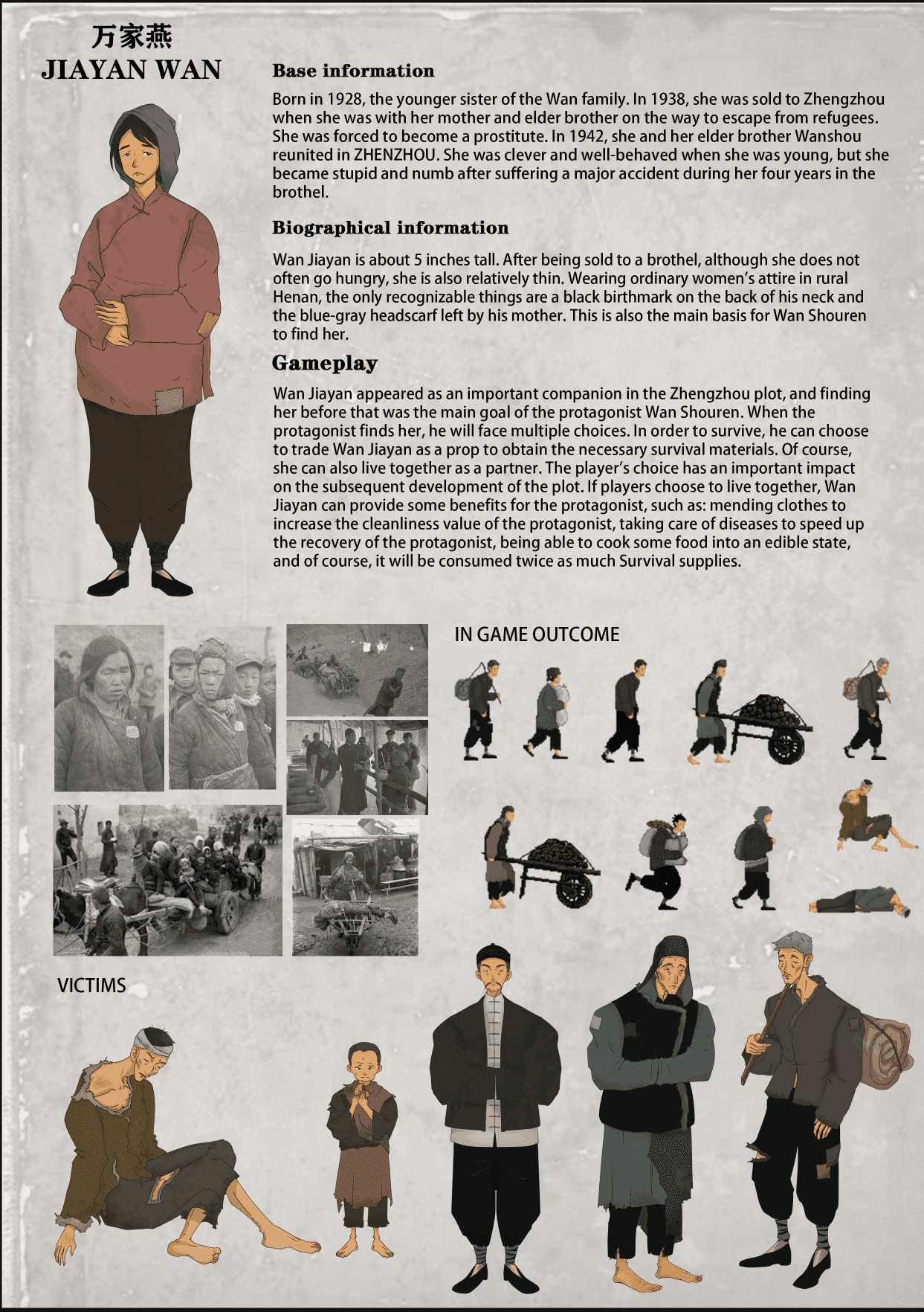
Plate 03
Scenes & storyboards
Storyboard sheet — interface studies and scene blocking for the first act; each panel restages a documented event from the oral histories.
View full plate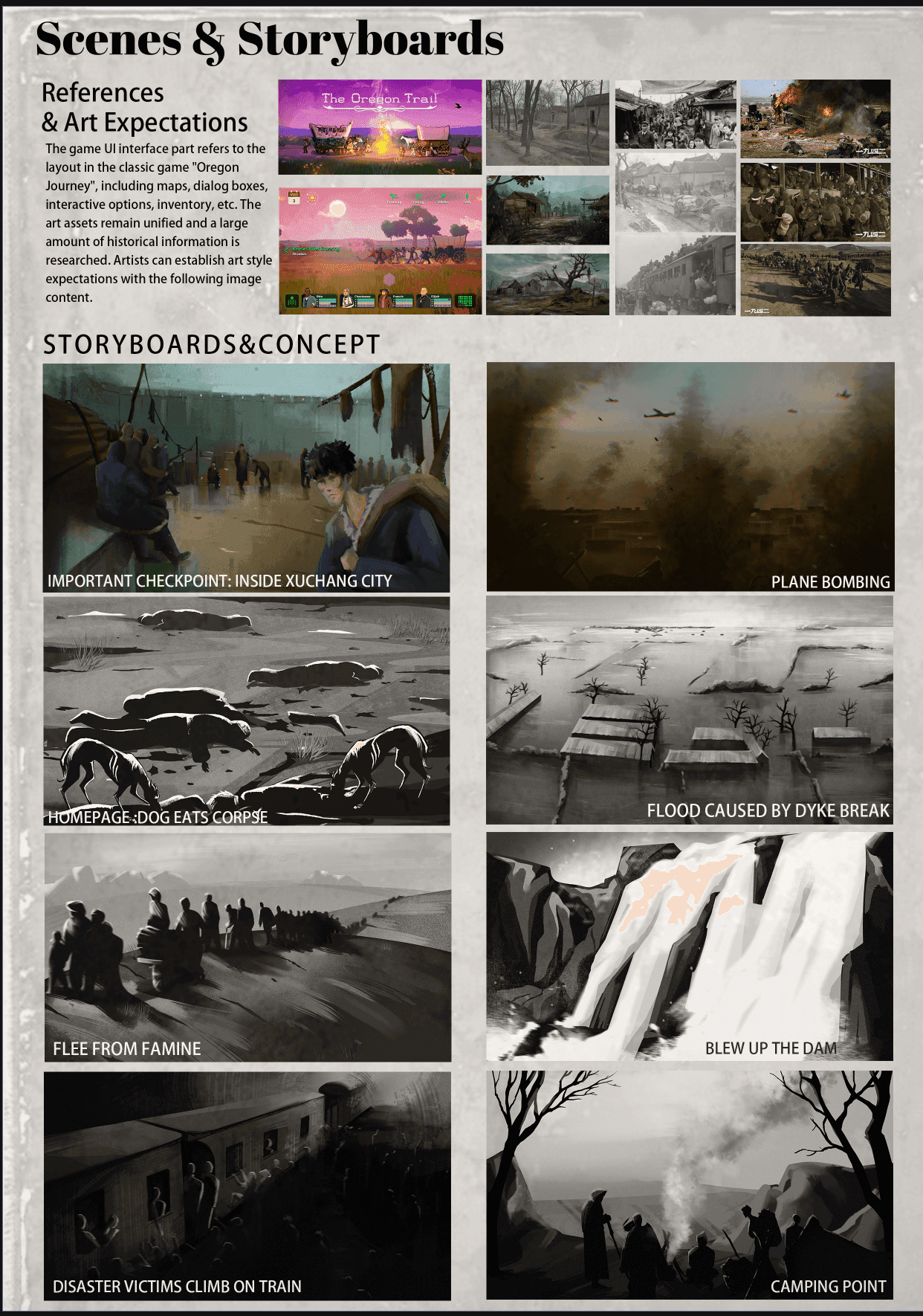
Plate 04
In-game scenes
Level one in pixels — plundering the landlord's burning granary, the protagonist's home, dialogue choices, and the inventory that meters every day of survival.
View full plate